
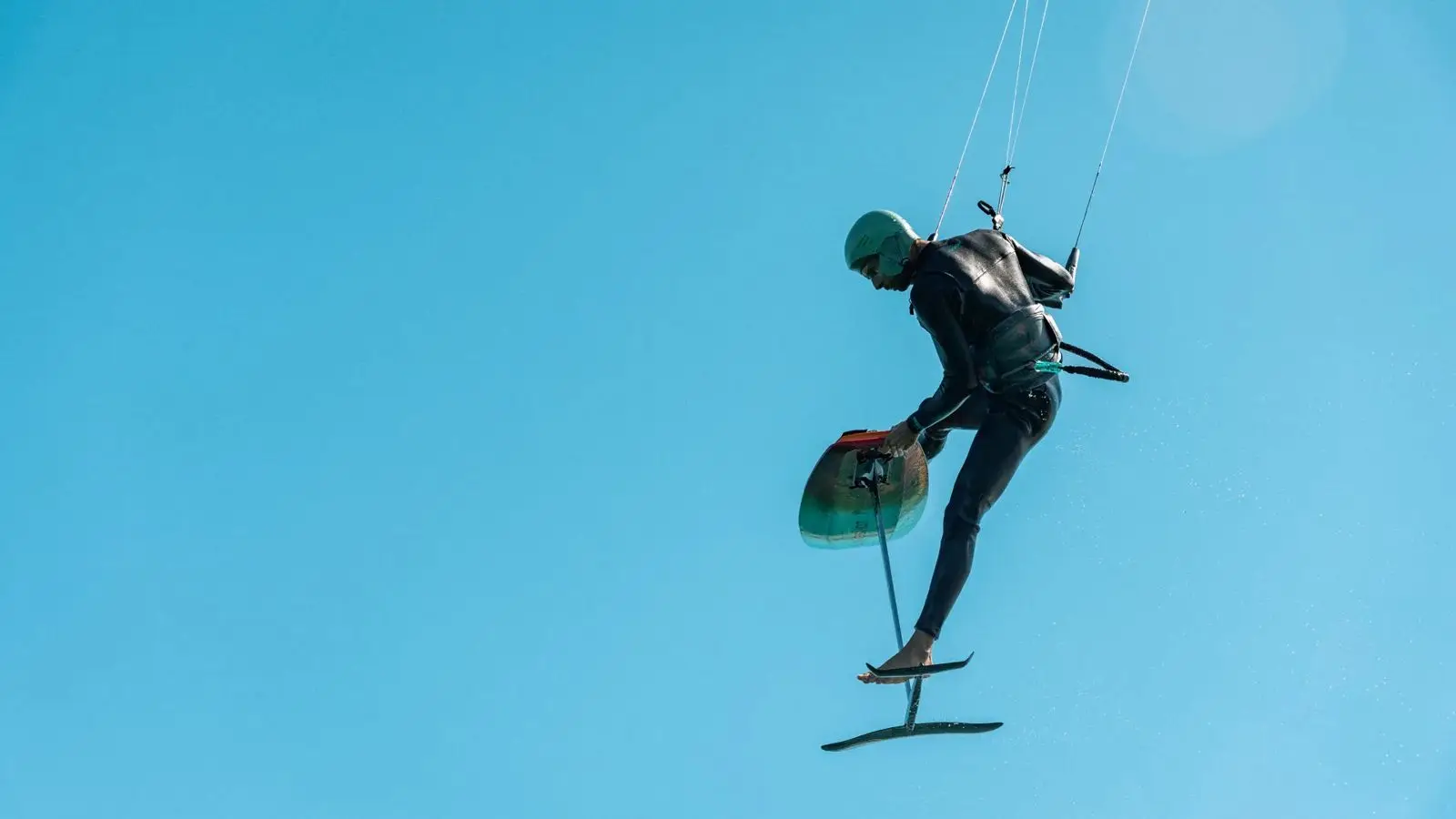
E-foil safety
E-foiling is safe when you respect four things: a remote that cuts power when you let go, the propeller, flotation and head protection, and other people on the water. Batteries are handled the way the manufacturer says. Your instructor's briefing always comes first.
The remote is your brake
On most e-foil remotes, letting go of the throttle cuts power. Your instructor will show you how your remote starts, stops and behaves if the connection is lost. Use small, smooth inputs; too much throttle too soon is the most common beginner mistake.
Respect the propeller
The motor and propeller sit under the board. Keep hands and feet away, make the system safe before touching the foil or swimming near it, and never ride near swimmers.
Flotation and head protection
Wear the flotation and head protection that goes with the session. Sun protection matters too: long days on the water add up.
Falling well
You will fall. Aim away from the board and the foil, fall flat rather than feet first, and let go of the throttle. We practise this early.
Other people and the weather
An e-foil is quiet. We ride in agreed areas, slow right down near anyone in the water, and call off or move a session when wind, chop or storms make it unsafe.
Batteries
E-foil batteries store a lot of energy and are regulated for air, sea and road transport. We leave handling and charging to the crew or follow the manufacturer exactly. If you travel with your own gear, check your airline, the manufacturer and customs. Not legal advice.
Getting to and from the water
The ride to the beach is part of the day. Pre-book your transport so you arrive on time with your group and kit. See getting there.
More reading
E-foil safety basics on Kite Creatures covers the same ground in a different way.
Questions people ask
Is e-foiling safe?
What happens if I let go of the throttle?
Is the propeller dangerous?
What should I wear?
Can I e-foil if I am injured or pregnant?
What about other people in the water?
Are e-foil batteries dangerous?
Ask for a session
Tell us your level, your dates and how many people. We will reply with what is available.
Photo: Eric Duran. Illustration: Kite Creatures.